Request Sent a Appointment
Best Endoscopic Ultrasound in Andheri
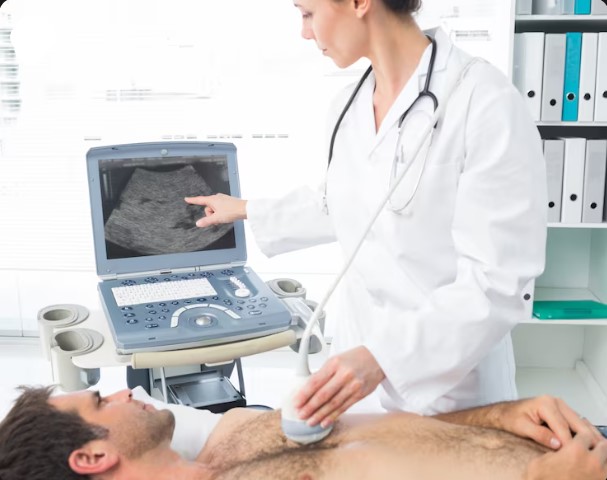
Best Endoscopic Ultrasound in Andheri – Advanced GI Imaging & Diagnosis
When standard imaging tests such as CT scans, MRI, or conventional ultrasound cannot provide clear answers about a gastrointestinal or pancreatic condition, Endoscopic Ultrasound (EUS) offers a level of diagnostic precision that is unmatched. It is a minimally invasive procedure that allows doctors to visualise not only the inner lining of the digestive tract but also the surrounding organs and structures from extremely close range.
If you are searching for the best Endoscopic Ultrasound in Andheri, Dr. Amol Vadgaonkar is a trusted specialist with an Advanced Fellowship in EUS and ERCP, trained at the Baldota Institute of Digestive Sciences, Mumbai. He brings exceptional expertise in both diagnostic and interventional EUS procedures to patients across Andheri, Mumbai, and the surrounding areas.
What Is Endoscopic Ultrasound (EUS)?
Endoscopic Ultrasound is an advanced endoscopic procedure that uses a thin, flexible tube — called an echoendoscope — fitted with a high-frequency ultrasound transducer at its tip. This instrument is gently passed through the mouth (for upper EUS) or the rectum (for lower EUS), allowing the physician to obtain high-resolution ultrasound images from inside the body.
Because the ultrasound probe is placed directly against the wall of the stomach, oesophagus, or duodenum, it can capture highly detailed images of adjacent structures — including the pancreas, bile ducts, gallbladder, liver, lymph nodes, and the layers of the gut wall — without the interference of gas or body fat that often limits external ultrasound scans.
EUS can be used purely for diagnosis (diagnostic EUS) or combined with therapeutic interventions such as tissue sampling or fluid drainage (interventional EUS), making it one of the most versatile tools in modern gastroenterology.
How EUS Differs from Conventional Endoscopy and Ultrasound
Understanding the key differences helps clarify why EUS is often the investigation of choice in complex cases:
| Feature | Standard Endoscopy | Conventional Ultrasound | Endoscopic Ultrasound (EUS) |
|---|---|---|---|
| Gut wall layers | Surface only | Limited | All 5 layers clearly visible |
| Pancreas imaging | Not possible | Moderate (gas interference) | Excellent detail |
| Bile duct evaluation | Indirect only | Variable | Superior resolution |
| Tissue biopsy | Surface only | Not possible | Real-time guided FNA/FNB |
| Lymph node staging | Not possible | Limited | High accuracy |
Conditions Diagnosed and Managed with EUS
As the provider of the best Endoscopic Ultrasound in Andheri, Dr. Vadgaonkar uses EUS to evaluate a wide range of gastrointestinal and hepato-pancreato-biliary conditions:
1. Pancreatic Conditions
EUS is the gold-standard investigation for detecting small pancreatic tumours that may be missed on CT or MRI scans. It is also used to evaluate pancreatic cysts (including mucinous cysts that carry cancer risk), assess the extent of chronic pancreatitis, and guide drainage of pancreatic pseudocysts and walled-off necrosis. EUS-guided fine needle aspiration (EUS-FNA) allows tissue diagnosis without surgery.
2. Cancer Staging
Accurate staging is critical for determining the right cancer treatment. EUS is used to stage oesophageal cancer, gastric (stomach) cancer, rectal cancer, ampullary cancer, and cholangiocarcinoma (bile duct cancer). It assesses the depth of tumour invasion into the gut wall layers (T-staging) and identifies involved lymph nodes (N-staging) with greater accuracy than most other imaging modalities.
3. Submucosal Lesions of the GI Tract
Submucosal lesions — abnormal bumps seen below the surface lining during routine endoscopy — can include gastrointestinal stromal tumours (GISTs), lipomas, leiomyomas, carcinoid tumours, and varices. EUS is the most reliable method for identifying the layer of origin and the echo characteristics of such lesions, which guides the decision on whether surveillance or surgical removal is needed.
4. Biliary and Gallbladder Disorders
EUS is highly sensitive in detecting small gallstones (microlithiasis) and common bile duct stones that might be missed on standard ultrasound. It is also used to evaluate biliary strictures, assess gallbladder polyps, and investigate unexplained obstructive jaundice to identify the precise cause before planning further intervention.
5. Mediastinal and Lung Conditions
Through the wall of the oesophagus, EUS can access and biopsy mediastinal lymph nodes enlarged by lung cancer, lymphoma, or sarcoidosis — offering a less invasive alternative to surgical mediastinoscopy. This is particularly valuable for staging non-small cell lung cancer.
6. Rectal and Perianal Conditions
EUS of the rectum (rectal EUS) is used to evaluate the depth of rectal tumours, assess perianal fistulas, and examine anal sphincter integrity in patients with faecal incontinence. It provides detailed information that directly guides surgical planning.
EUS-Guided Therapeutic Interventions
Modern EUS goes far beyond diagnosis. Under real-time ultrasound guidance, Dr. Vadgaonkar can perform several targeted therapeutic procedures that were previously possible only through open surgery:
- EUS-FNA (Fine Needle Aspiration): Collecting fluid or cells from cysts, masses, or lymph nodes for laboratory analysis
- EUS-FNB (Fine Needle Biopsy): Obtaining a core tissue sample for histological diagnosis — particularly useful for submucosal lesions and pancreatic masses
- EUS-guided drainage: Draining pancreatic pseudocysts, walled-off pancreatic necrosis, and abdominal abscesses by placing a stent through the gut wall into the fluid collection
- EUS-guided biliary drainage (EUS-BD): When ERCP fails or is not possible, EUS can be used to access the bile duct directly and create an alternative drainage route
- EUS-guided coeliac plexus neurolysis (CPN): Injecting a pain-blocking agent into the coeliac plexus nerve cluster to provide relief from severe abdominal pain caused by pancreatic cancer or chronic pancreatitis
- EUS-guided tumour ablation: Emerging techniques for injecting substances directly into tumours under EUS guidance as part of palliative care
What to Expect During an EUS Procedure
Before the Procedure
For upper EUS, you will be asked to fast for 6–8 hours. For lower (rectal) EUS, a bowel preparation will be prescribed. You should inform Dr. Vadgaonkar about all medications you are taking, particularly blood thinners such as aspirin, clopidogrel, or warfarin, as these may need to be temporarily stopped. Arrange for a responsible adult to accompany you, as you will receive sedation.
During the Procedure
You will be given an intravenous sedative to keep you comfortable and relaxed. The echoendoscope is gently passed through the mouth or rectum. The procedure typically takes 20 to 60 minutes depending on the complexity. Most patients have no recollection of the procedure due to the sedation used.
After the Procedure
You will be monitored in a recovery area until the sedation wears off, usually for 1–2 hours. Mild bloating or a slightly sore throat may be present, but these resolve quickly. You can typically resume a normal diet within a few hours. EUS is a day-care procedure and does not require hospital admission in most cases. Biopsy results, if taken, usually take a few days and will be discussed at your follow-up consultation.
Why Dr. Amol Vadgaonkar for Endoscopic Ultrasound in Andheri?
Choosing an experienced and fellowship-trained EUS specialist makes a significant difference in both the quality of the procedure and the accuracy of diagnosis. Here is what sets Dr. Vadgaonkar apart:
- Advanced Fellowship Training: Specialist fellowship in EUS and ERCP from the Baldota Institute of Digestive Sciences, one of India's premier centres for advanced endoscopy
- Dual expertise: Proficiency in both diagnostic EUS and complex interventional EUS procedures, including EUS-FNA, EUS-FNB, and EUS-guided drainage
- Academic recognition: Award-winning research presented at ISGCON and APDW — top national and international gastroenterology conferences
- Professional memberships: Active member of the Society of Gastrointestinal Endoscopy of India (SGEI), American College of Gastroenterology (ACG), and Indian Society of Gastroenterology (ISG)
- Patient-first approach: Thorough pre-procedure consultation, clear explanation of findings, and compassionate follow-up care
- Accessible location: Clinic at Apple Diagnostic Centre, Near Andheri Station, Andheri East — conveniently reached from across Mumbai
Is EUS Safe? Understanding the Risks
Endoscopic Ultrasound is a very safe procedure when performed by a trained specialist. The overall complication rate is low — generally less than 1–2% for diagnostic EUS. Potential risks include:
- Mild sore throat or discomfort (common and temporary)
- Allergic reactions to sedation medications (rare)
- Bleeding at the biopsy site — more likely if you are on blood thinners (uncommon)
- Perforation of the gut wall (very rare, less than 0.1%)
- Infection following drainage procedures (risk is minimised with antibiotics)
- Pancreatitis following pancreatic FNA (rare, usually mild)
Dr. Vadgaonkar takes every precaution to minimise procedural risk through thorough patient evaluation, careful technique, and adherence to international endoscopy safety guidelines.
Consult the Leading EUS Specialist in Andheri
If you or a loved one needs an Endoscopic Ultrasound for diagnosis or treatment, book a consultation with Dr. Amol Vadgaonkar today.
Book an Appointment →+91 8369730858 | Tue, Thu, Sat | 7 PM – 9 PM
Frequently Asked Questions
Common questions about Endoscopic Ultrasound (EUS) and Dr. Amol Vadgaonkar's clinic in Andheri.
Book a Consultation
EUS Specialist in Andheri East, Mumbai
Book Appointment →Tue | Thu | Sat
7:00 PM – 9:00 PM
EUS Procedure at a Glance
- ✓ Day-care procedure
- ✓ Performed under sedation
- ✓ Duration: 20–60 minutes
- ✓ Fasting required (6–8 hrs)
- ✓ No surgical incisions
- ✓ Real-time guided biopsy
- ✓ Complication rate <1–2%
Clinic Location
Apple Diagnostic Centre,
202/A, Siddhi Aura, Above HDFC Bank,
Near Andheri Station,
Andheri East, Mumbai – 400069
